


-
Partager cette page
Relative pollen productivity estimates from India: A step towards quantitative reconstruction of past plant abundance
Cosigné F.MAZIER
This study estimates relative pollen productivity (RPP) for key plant taxa of tropical dry evergreen forests in southeastern India to improve Holocene vegetation reconstructions, revealing significant differences from African data and highlighting strong regional variability in pollen–vegetation relationships.
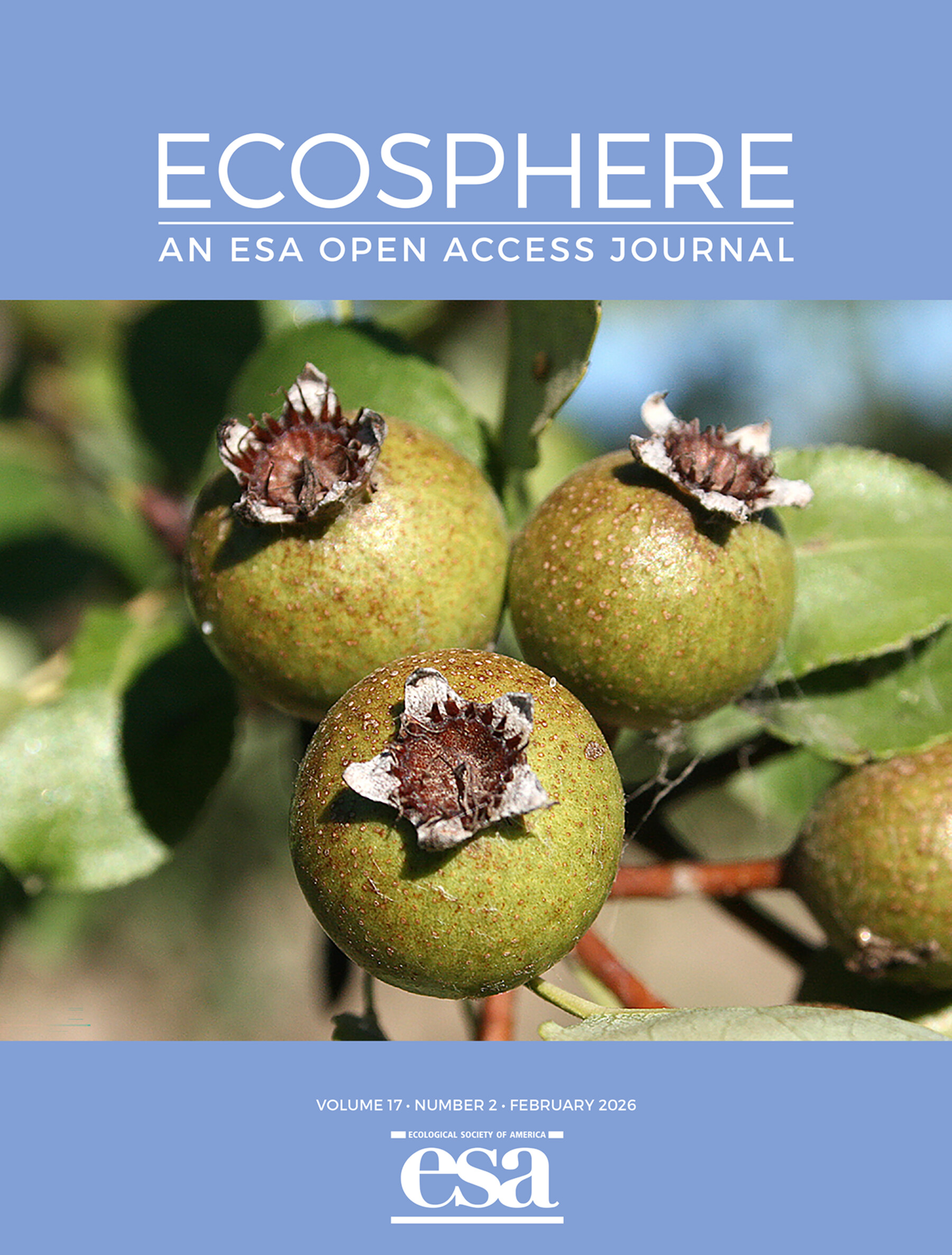
Pollen records and models of pollen–vegetation relationships are required to reconstruct past plant abundances during the Holocene to answer specific questions on climate history, human impact, biodiversity, and their interactions. An important parameter for model applications is pollen productivity, estimated as relative pollen productivity (RPP) using a modern dataset of pollen assemblages and related plant cover using the extended R value (ERV) model.
We present here the first study performed in India to obtain estimates of RPP for key plant taxa of the tropical dry evergreen forest (TDEF) formations in southeastern India. Pollen samples collected following standard protocols at 14 sites with a stratified random distribution provided 96 identified pollen morphotypes corresponding to 228 plant species in the field surveys. To facilitate comparison of these results with RPP values obtained in other tropical regions, the approach and programs of Sugita were used.
Several combinations of 20 selected pollen morphotypes were deployed in the model runs that comprised different combinations of three Prentice–Sugita ERV submodels, with three pollen dispersion models for distance weighting of the vegetation data. The best RPP estimates were obtained for six major TDEF plant taxa including the reference taxon Poaceae with ERV submodel 3 and Prentice's dispersion model.
While several of these taxa occur elsewhere in Asia, the Caribbean and Africa, published RPP values for comparison are only available for Acacia-t. and Melastomataceae/Combretaceae in Africa. They differ greatly from the values in this study, implying a strong pollen underrepresentation of the two taxa compared to Poaceae in Africa, while there is a strong pollen overrepresentation for the same two taxa in southern India. This is tentatively explained by differences in constituent species, landscape structure, and related field work strategies.
These results highlight that large between-continent differences in RPPs for the same taxa may occur.
Découvrez l'intégralité de l'article à partir du site web https://esajournals.onlinelibrary.wiley.com