


-
Partager cette page
Linking capital assets to the understanding and adoption of the Sustainable Development Goals: Evidence from young farmers in the Ecuadorian Amazon
Cosigné Mehdi Saqalli & Marco Heredia-Rengifo
Publié le 15 juin 2026 – Mis à jour le 15 juin 2026
This study shows that young farmers’ engagement with the Sustainable Development Goals (SDGs) in the Ecuadorian Amazon is shaped by different forms of capital (human, social, physical, and financial) and socio-demographic factors, highlighting the importance of targeted sustainability education and rural development policies.
Abstract
Sustainability education is crucial for empowering young farmers to adopt environmentally responsible practices, yet it remains understudied due to limited resources, logistical challenges, and competing political priorities. This study addresses this gap by examining how different forms of capital shape young farmers’ understanding and adoption of the Sustainable Development Goals (SDGs) in the Llanganates Sangay Ecological Corridor (LSEC) of the Ecuadorian Amazon. The specific objectives were to: i) identify socio-demographic characteristics within the dimensions of capital theory (human, social, physical, and financial), ii) assess SDG understanding and adoption, and iii) determine which characteristics influence these outcomes. Data from 110 young farmers were collected through surveys using cluster and snowball sampling schemes, which were adapted to the territorial complexity and educational levels. Fisher’s test, Chi-square test, Spearman’s correlation, and discriminant analysis were applied. Results revealed significant gender disparities in the perceived importance of education as a source of human capital, household access to roads, and specific financial indicators. Notably, 73.31 % of women valued education highly, and 64.55 % expressed stronger associative aspirations than men. However, no statistically significant differences emerged in overall SDG understanding and adoption. Engagement with the SDGs was positively associated with age, prior knowledge, awareness of target countries, and associative support. These findings highlight the role of socio-demographic factors and forms of capital in shaping young farmers’ engagement with the SDGs, providing evidence to inform targeted sustainability education and rural development policies.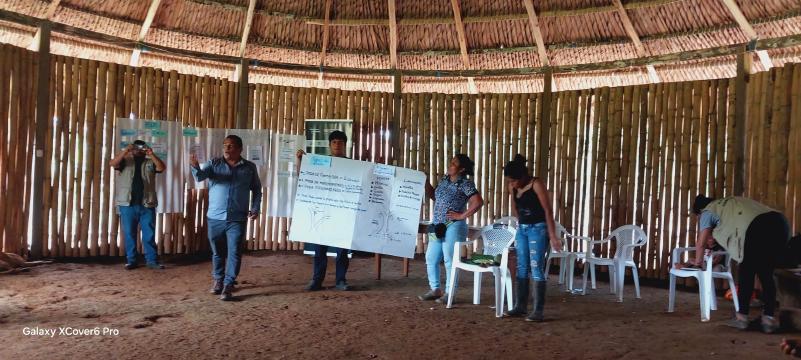
Page Perso de Mehdi Saqalli

Les auteurs :
Duque-Rengel V., Heredia-Rengifo M., Cayambe J., Torres Y., Puhl L., Saqalli M., Diaz-Ambrona C. G. H.
Les auteurs :
Duque-Rengel V., Heredia-Rengifo M., Cayambe J., Torres Y., Puhl L., Saqalli M., Diaz-Ambrona C. G. H.