

-
Partager cette page
Aleksandra Kapetanovic
Research EngineerTaught academic discipline(s)
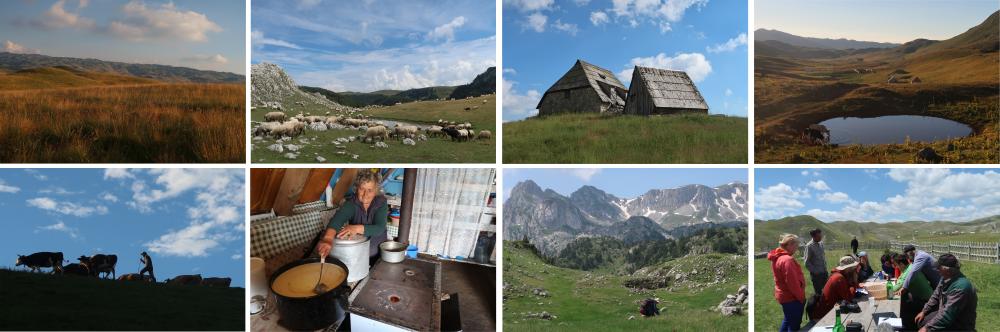
Research assistant on the project Sinjajevina - pastoral areas in the frame of the project "IRIS - Inspiring Rural Heritage: Sustainable Practices to Protect and Conserve Upland Landscapes and Memories" co-funded by ANR (nº ref ANR-20-JPIC-0003) and EU Horizon 2020 (nº ref 6995327) within the 2019 call of the Joint Programming Initiative on Cultural Heritage (JPICH): https://www.heritageresearch-hub.eu/project/iris.
Mission in the frame of the IRIS project :
- Collect and process data on Pastoral Areas Conserved by Local Communities in Sinjajevina;
- Contribute to the understanding of the Sinjajevina system to support its living rural heritage in order to inspire other similar systems in the country or elsewhere, and in particular in other highlands in Europe.
Research topics
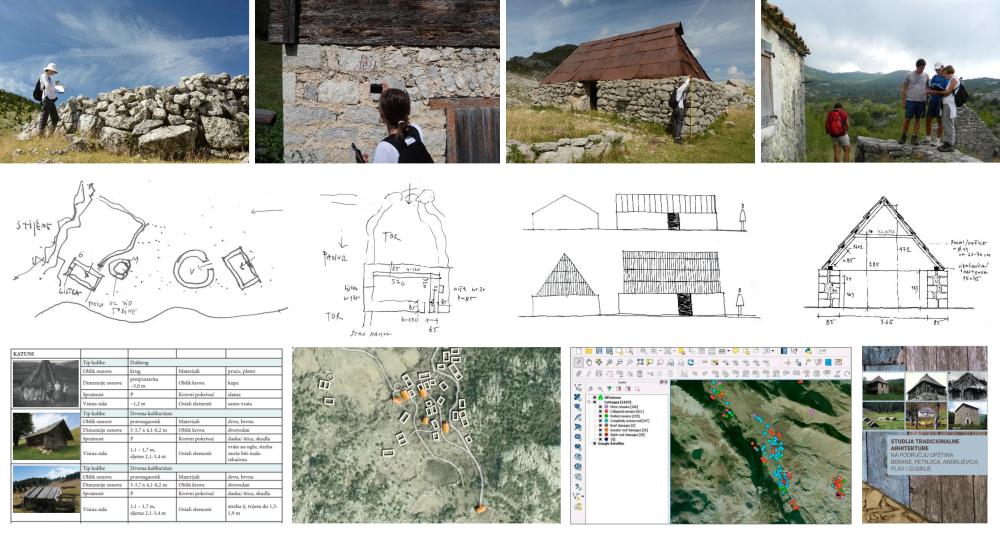
- Rural heritage, including katuns - seasonal pastoral settlements in mountains
- Cultural landscapes
- Management of cultural heritage and participatory process in heritage protection, particularly of local communities
- World Heritage
Activities / Resume
Aleksandra Kapetanović is a conservation architect (Kotor, Montenegro). She worked in the Regional Institute for Cultural Heritage Protection in Kotor, governmental institution dealing with protection of cultural heritage including World Heritage Site - Natural and Culturo-Historical Region of Kotor.
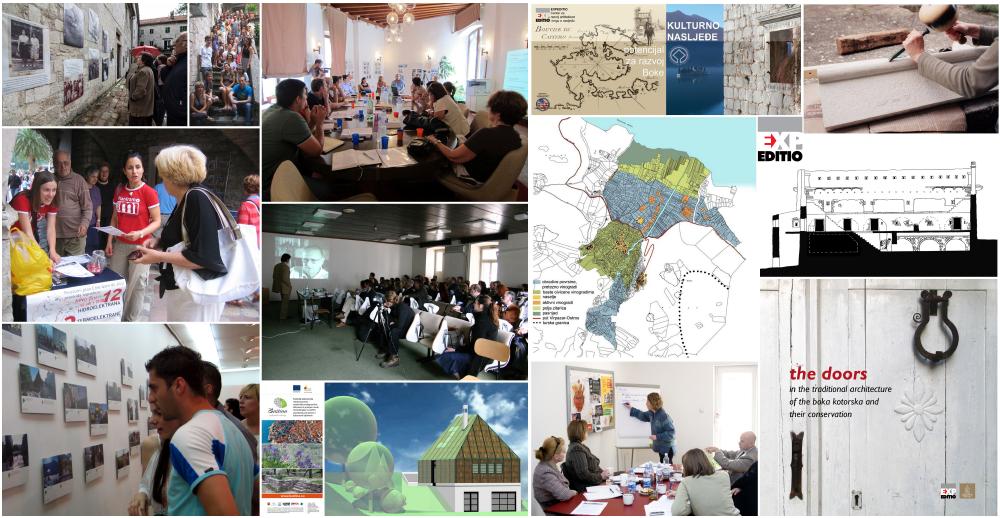
She is one of the founders of the NGO EXPEDITIO - Center for Sustainable Spatial Development (www.expeditio.org) and coordinator of its cultural heritage sector. Working for more than twenty-five years in this sector she has gained extensive experience in implementing and coordinating projects and research activities in Montenegro and other South East European countries, for different national institutions and international organizations, in the fields of cultural heritage and sustainable development, which aim, through multidisciplinary and participatory approach, to contribute to the overall development of civil society. She has organized numerous workshops, restoration work camps, round tables, lectures, seminars, exhibitions. At the same time, she has conducted studies and researches, assessments, management plans, conservation projects as well as advocacy activities and campaigns about cultural heritage.
Training
- 2016: International Training Course on Heritage Impact Assessments, UNESCO - WHITRAP Shanghai, ICCROM, Tongji University, Vigan, The Philippines
- 2011: Fourth International Course on the Conservation of Modern Architecture (MARC 2011): Metamorphosis - Understanding and Managing Change, ICCROM and Alvar Aalto Academy, Helsinki, Finland
- 2008: Advanced International Training Programme ”Conservation and Management of Historic Buildings”, Lund University, Housing Development & Management, Lund, Sweden
- 2003: Specialisation course in New Technologies for Valorisation and Management of Mediterranean Heritage, European University Centre for Cultural Heritage, Ravello, Italy
- 2002: Postgraduate course on Architectural Conservation Studies, Academia Istropolitana Nova, Svaty Jur, Slovak Republic
- 2000: Graduate engineer of architecture, Faculty of Architecture, Belgrade University, Belgrade, Serbia
Publications extraites de HAL affiliées à Geode : Géographie de l'environnement
Additional information
Aleksandra Kapetanović a coordonné des projets de recherche sur le patrimoine rural au Monténégro, y compris la réalisation d'études et d'évaluations du patrimoine culturel dans les zones de montagne.
Elle a été membre de l'équipe de l'Institut historique du Monténégro dans le cadre du projet de recherche scientifique "Valorisation des établissements de pâturages monténégrins par le développement durable de l'agriculture et du tourisme - KATUN" financé par le ministère des Sciences du Monténégro par le biais du programme de la Banque mondiale, dans le cadre duquel elle a étudié le patrimoine culturel des katuns (habitations saisonniers de montagne).
Complementary information :
Aleksandra Kapetanović has coordinated research projects on rural heritage in Montenegro, including conducting studies and assessments of cultural heritage in mountain areas. She was a member of the Historic Institute of Montenegro team in the scientific-research project “Valorization of Montenegrin pasture settlements through the sustainable development of agriculture and tourism–KATUN” funded by the Ministry of Science of Montenegro through the World Bank program, within which she studied cultural heritage of katuns (seasonal mountain settlements).
Sélection d'articles dans des revues scientifiques / Selection of articles in scientific journals
Sélection d’ouvrages et chapitres d'ouvrages / Selection of books and book chapters
Sélection d'autres articles et publications / Selection of other articles and publications