

-
Partager cette page
Magali Philippe - Participation in scientific research projects
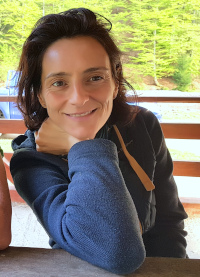
Magali PHILIPPE
Research Engineer CNRS
- Phone: 05 61 50 36 99
- Email : magali.philippe@univ-tlse2.fr
- Adress : Bureau C122
Maison de la Recherche, Jean Jaurès University
5, Allées A. Machado
31058 TOULOUSE Cedex 1
OHM HeritSERV Project, 2017 : Observation of legacy effects of past landscapes on current ecosystem services (collaboration with Dynafor, INRA)
Assessment of the magnitude of these legacy effects of past landscapes on current ecosystem services. The project proposes to compare current ecosystem services with current and past landscapes within the OHM Pyrénées Haut Vicdessos. Assessment of Provisioning services (herbaceous biomass), Regulation services (TeaComposition Protocol), Cultural services (flower cover), Disservices (abundance of ticks and moles), Biodiversity (bird diversity), and aesthetic value of landscapes through surveys.
OHM DIGSOIL Project, 2017 : Digital geochemical soil mapping in the areas of Estarreja, Vicdessos, Gardanne and Marseille (collaboration Ecolab, CNRS) :the main aim of the project is to carry out a systematic geochemical soil mapping in the areas of Estarreja, Vicdessos, Gardanne and Marseille. Geochemical soil mapping is needed in order to understand the sources, transport, transformations, and fate (including human and ecosystem health) of chemical constituents in the settings of the different Observatoires Hommes-Milieux (OHMs). Elemental concentrations in the soil will be determined using a field-portable X-ray fluorescence spectrometer (FPXRF).
FORETEXIL OASIC Challenge Project, 2017 : Les vieilles FORETs du Maramureș (Carpates orientales) face à l’EXploitation forestière Intensive : plan d'urgence pour une étude gLobale en vue de leur préservation et gestion durable :The project proposes an interdisciplinary diachronic assessment of the old‑growth forests of Maramureș (Transylvania) to implement predictive models (growth, distribution) and support local management policies in protecting and sustainably using them. It aims to:
OHM LabEx DRIIHM FISH‑2 Project, 2017 :
The FISH2 project aims to reconstruct, through a global ecology approach, the history and impact of salmonid introduction into high‑altitude lakes. This process of anthropisation and artificialisation of aquatic ecosystems accelerated during the 20th century, causing major impacts on biodiversity and lake functioning. The project seeks to document an overlooked socio‑ecological history and to measure the ecological impacts of introducing non‑native salmonids through an original approach combining history, historical ecology, limnology and palaeolimnology.
MSHS CultiLac Project, 2017 - Cultiver les lacs : histoire et impact de l'empoissonnement des lacs pyrénéens durant l'anthropocène.
CultiLac aims to document, across the entire Pyrenean range, the history and ecological impact of a recent and still poorly understood form of anthropisation of mountain environments: the introduction of fish into high‑altitude lakes, the vast majority of which were originally fishless. This project seeks to:
OHM GRASP Project, 2018 – Grassland Ecosystem Services in the Pyrenees :
The objective is to assess the effects of various factors on the ecosystem services provided by grasslands within the OHM Pyrénées Haut Vicdessos. This project follows the HeritSERV project carried out in 2017. In the GRASP project, the aim is to:
TAHMM Project, 2018 – Archaeological survey (Collaboration with the TRACES laboratory, CNRS) :
This is an exploratory approach aimed at determining whether it is possible to distinguish, based on certain soil chemical elements that serve as markers of past livestock presence (concentrations of Phosphorus, Potassium, Calcium and Magnesium analysed using a portable X‑ray fluorescence spectrometer), areas corresponding to enclosures from undisturbed areas.
OMP CARE Call for Projects, 2019 – Characterisation of arsenic presence and water‑related risks in Chile (Collaboration with the GET laboratory, CNRS) :
This interdisciplinary project aims to address concerns about water‑related risks raised by residents of three municipalities located north of Santiago de Chile in the Chacabuco province. Testimonies mention arsenic contamination of water and an increased occurrence of cancers, although existing data do not allow a link to be established. This project brings together geographers (GEODE), sociologists (GET) and environmental geochemists (GET) in order to characterise the pollution as accurately as possible and to understand the associated health risks.
GEODE MIN’OR Project, 2019 – Interactions between mining pollution, floods and societies in the Orbiel watershed :
The Orbiel watershed (Aude) has undergone long‑term mining exploitation (gold and arsenic), whose environmental and health consequences are still poorly understood but potentially problematic. Contaminated mining deposits are poorly secured and are sometimes remobilised by floods, which are very violent in this area. This exploratory work aims to better understand how pollution‑ and flood‑related risk is constructed, by characterising soil pollution levels in flood‑prone areas, understanding interactions between pollution and flooding, and analysing the apparently paradoxical relationships that local and national stakeholders maintain with this issue, oscillating between mobilisation, concern and denial.
Assessment of the magnitude of these legacy effects of past landscapes on current ecosystem services. The project proposes to compare current ecosystem services with current and past landscapes within the OHM Pyrénées Haut Vicdessos. Assessment of Provisioning services (herbaceous biomass), Regulation services (TeaComposition Protocol), Cultural services (flower cover), Disservices (abundance of ticks and moles), Biodiversity (bird diversity), and aesthetic value of landscapes through surveys.
OHM DIGSOIL Project, 2017 : Digital geochemical soil mapping in the areas of Estarreja, Vicdessos, Gardanne and Marseille (collaboration Ecolab, CNRS) :the main aim of the project is to carry out a systematic geochemical soil mapping in the areas of Estarreja, Vicdessos, Gardanne and Marseille. Geochemical soil mapping is needed in order to understand the sources, transport, transformations, and fate (including human and ecosystem health) of chemical constituents in the settings of the different Observatoires Hommes-Milieux (OHMs). Elemental concentrations in the soil will be determined using a field-portable X-ray fluorescence spectrometer (FPXRF).
FORETEXIL OASIC Challenge Project, 2017 : Les vieilles FORETs du Maramureș (Carpates orientales) face à l’EXploitation forestière Intensive : plan d'urgence pour une étude gLobale en vue de leur préservation et gestion durable :The project proposes an interdisciplinary diachronic assessment of the old‑growth forests of Maramureș (Transylvania) to implement predictive models (growth, distribution) and support local management policies in protecting and sustainably using them. It aims to:
- characterise the current state of these forests (dendrological composition, structure, internal complexity), their degree of naturalness, their current biodiversity and the ecosystem services they provide,
- reconstruct their Holocene evolution and their interactions with human societies,
- identify their vulnerability thresholds,
- measure the impact of ongoing global change (heavy metals, changes in practices and climate warming).
OHM LabEx DRIIHM FISH‑2 Project, 2017 :
The FISH2 project aims to reconstruct, through a global ecology approach, the history and impact of salmonid introduction into high‑altitude lakes. This process of anthropisation and artificialisation of aquatic ecosystems accelerated during the 20th century, causing major impacts on biodiversity and lake functioning. The project seeks to document an overlooked socio‑ecological history and to measure the ecological impacts of introducing non‑native salmonids through an original approach combining history, historical ecology, limnology and palaeolimnology.
MSHS CultiLac Project, 2017 - Cultiver les lacs : histoire et impact de l'empoissonnement des lacs pyrénéens durant l'anthropocène.
CultiLac aims to document, across the entire Pyrenean range, the history and ecological impact of a recent and still poorly understood form of anthropisation of mountain environments: the introduction of fish into high‑altitude lakes, the vast majority of which were originally fishless. This project seeks to:
- document the socio‑ecological and spatio‑temporal history (mapping) of fish introductions across the entire Pyrenean range (stages, social determinants, introduced species);
- characterise and quantify at high temporal resolution the ecological and limnological impact of fish introduction based on a multi‑parameter study of several lake sediment records collected for this purpose in three target lakes.
OHM GRASP Project, 2018 – Grassland Ecosystem Services in the Pyrenees :
The objective is to assess the effects of various factors on the ecosystem services provided by grasslands within the OHM Pyrénées Haut Vicdessos. This project follows the HeritSERV project carried out in 2017. In the GRASP project, the aim is to:
- to complete the assessment of grassland services and biodiversity,
- to collect information on grassland management and soil fertility,
- to explore the relationships between landscape, management and three types of pollution (light, noise, soil), as well as their effects on services,
- and to initiate the comparison of these effects between the Vicdessos valley and the Villelongue valley.
TAHMM Project, 2018 – Archaeological survey (Collaboration with the TRACES laboratory, CNRS) :
This is an exploratory approach aimed at determining whether it is possible to distinguish, based on certain soil chemical elements that serve as markers of past livestock presence (concentrations of Phosphorus, Potassium, Calcium and Magnesium analysed using a portable X‑ray fluorescence spectrometer), areas corresponding to enclosures from undisturbed areas.
OMP CARE Call for Projects, 2019 – Characterisation of arsenic presence and water‑related risks in Chile (Collaboration with the GET laboratory, CNRS) :
This interdisciplinary project aims to address concerns about water‑related risks raised by residents of three municipalities located north of Santiago de Chile in the Chacabuco province. Testimonies mention arsenic contamination of water and an increased occurrence of cancers, although existing data do not allow a link to be established. This project brings together geographers (GEODE), sociologists (GET) and environmental geochemists (GET) in order to characterise the pollution as accurately as possible and to understand the associated health risks.
GEODE MIN’OR Project, 2019 – Interactions between mining pollution, floods and societies in the Orbiel watershed :
The Orbiel watershed (Aude) has undergone long‑term mining exploitation (gold and arsenic), whose environmental and health consequences are still poorly understood but potentially problematic. Contaminated mining deposits are poorly secured and are sometimes remobilised by floods, which are very violent in this area. This exploratory work aims to better understand how pollution‑ and flood‑related risk is constructed, by characterising soil pollution levels in flood‑prone areas, understanding interactions between pollution and flooding, and analysing the apparently paradoxical relationships that local and national stakeholders maintain with this issue, oscillating between mobilisation, concern and denial.