


-
Partager cette page
What time should streetlights be turned off to protect biodiversity?
Co-written by Samuel Challéat
As the practice of turning off lights at night spreads across communities, three studies focusing on robins, toads, and bats, respectively, show that simply turning off the lights for a few hours is often not enough to restore a natural night. For biodiversity, the challenge is not just about turning off the lights, but about knowing when and where to do so.
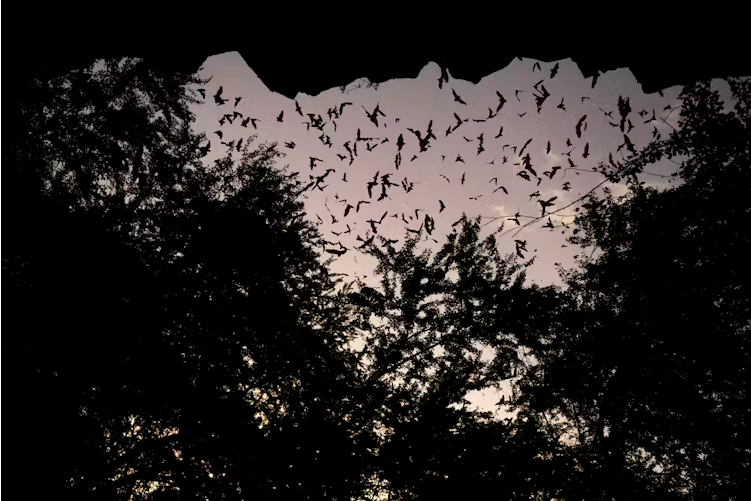
In recent years, turning off streetlights in the middle of the night has emerged as a simple solution to several challenges: reducing energy costs, demonstrating a commitment to energy conservation, and limiting light pollution and its effects on living organisms. From a biodiversity perspective, The best solution would be not to use any lighting at all. But this option conflicts with other legitimate uses of public spaces at night: ours!
That leaves one question: Is turning off the lights for a few hours in the middle of the night really enough to reduce the impact of light on biodiversity? Not necessarily: its effects on living organisms depend on the context—location, large-scale light patterns, and weather conditions—and on the species involved.
A widely used measure, but one whose biological effects remain poorly understood
In fact, not all species use the night in the same way. The early evening, the middle of the night, and the hours leading up to dawn often correspond to different behaviors: foraging, moving about, returning to roost, falling asleep and waking up, communicating…
In this context, Partially turning off the lights can help mitigate some of the effects of light pollution on biodiversity… or miss the point if it does not coincide with the peak activity periods of the species present.
Another important point: turning off the lights locally doesn't necessarily mean it will be completely dark. In cities, nearby light sources—streetlights on adjacent streets, signs, storefronts, or private lighting—as well as light scattered by clouds often maintain residual brightness. And this effect is not limited to urban centers: even in rural areas, the light halo from cities can remain visible for dozens of kilometers.
For the species most sensitive to light, the difference between periods when lights are on and off may therefore be minimal, even when streetlights are turned off locally. A municipality’s light-off schedules are therefore not sufficient, on their own, to describe the actual lighting conditions to which animals are exposed.
Read more on the website theconversation.com