


-
Partager cette page
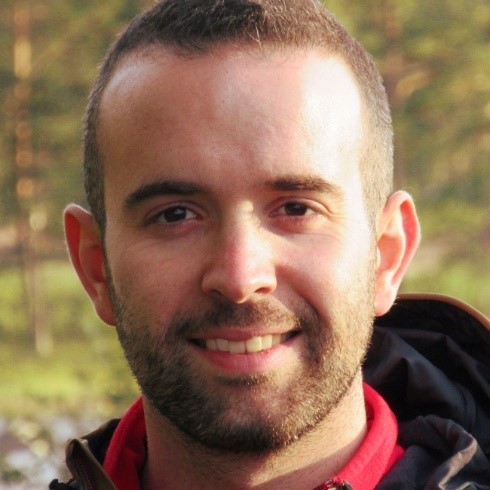
Romain MEJEAN
PhD candidateTaught academic discipline(s)
Teaching (at UT2J and abroad):
-
Environment, Societies and Territories (Year 1): 50 hours
- The Map: History, Uses and Commentary (Year 1): 50 hours
- Aerial Photography and Photo‑interpretation (Year 2): 50 hours
- Geoprospective, Scenario Building, Decision Support (Master 2): 2 hours
- Geomatics and Spatial Modelling: 10 hours of courses taught in Spanish at the Universidad Estatal Amazónica in Puyo (Ecuador).
Research topics
Thesis :
Retrospective modelling of environmental and social dynamics in the Amazonian region of Ecuador: coupling actor‑network models and spatio‑temporal models.- Supervisor: Martin PAEGELOW (PR UT2J/UMR 5602 GEODE)
- Co‑supervisor: : Mehdi SAQALLI (CR UMR 5602 GEODE)
My doctoral research focuses on modelling and simulation practices in environmental geography. I am particularly interested in prospective modelling of land‑use and land‑cover change (LUCC modelling), through the comparison and coupling of two approaches:
- Pattern‑based modelling, an inductive method based on the analysis of changes, and
- Process‑based modelling, a deductive method based on individual rationalities and complexity theory. My case study is deforestation in the Ecuadorian Amazon.
Context :
The northern part of the Ecuadorian Amazon, whose oil deposits have been exploited since the late 1960s, has been affected by the activities of the oil industry, with multiple consequences for the environment and local populations (environmental contamination and deforestation).The great majority of the inhabitants of these oil‑producing Amazonian provinces are Ecuadorians originating from the Andes or the coastal region, migrants or descendants of migrants who settled there after the opening of roads by the oil industry and were encouraged by the State (agrarian reforms of 1964 and 1973) to colonise this area. The Ecuadorian Amazon, which is among the world’s biodiversity hotspots, bears the marks of this agrarian colonisation, which still contributes today to the process of deforestation.
Goals :
This thesis proposes to reconstruct and assess, using spatial modelling and simulation methods, the past and present social and environmental dynamics that have led to the transformation of the Ecuadorian Amazon. On this basis, the aim is then to develop prospective scenarios in order to outline plausible futures for this territory.We therefore propose to compare two modelling approaches: on the one hand, a so‑called process‑based (agent‑based) modelling approach reconstructing individual rationalities and actor networks, and on the other hand, a so‑called pattern‑based modelling approach, based on a characterisation of the dynamics of colonisation of the Amazonian territory through land‑use change (satellite image classification, diachronic mapping). Each of these models will be confronted retrospectively with the most recent data in order to test their validity.
Mots clés : modélisation, déforestation, changement d’occupation et d’usage des sols, Amazonie équatorienne, épistémologie.
Activities / Resume
Academic Background:
-
2017 - 2024 : PhD in Geography.
- 2015-2017 : Master’s Degree (Year 2) in Geography, specialisation “Structures and Spatial Dynamics” (spatial analysis and modelling). Completion of two research dissertations, with High Distinction.
- 2012-2015 : Bachelor’s Degree in Geography and Planning, specialisation “Geographic Information Processing” (GIS), Aix‑Marseille University.
Publications extraites de HAL affiliées à Geode : Géographie de l'environnement
Additional information
Publications and Scientific Communications:
Book Chapters:Mejean, R., Paegelow, M., Saqalli, M., Kaced, D., 2019. Improving Business-as-Usual Scenarios in Land Change Modelling by Extending the Calibration Period and Integrating Demographic Data. In : Kyriakidis, P., Hadjimitsis, D., Skarlatos, D., Mansourian, A. (Eds.), Geospatial Technologies for Local and Regional Development, Proceedings of the 22nd AGILE Conference on Geographic Information Science, Springer International Publishing, 366 p.
International and National Symposia:
Mejean, R., De Meyer, C., Kaced, D., Saqalli, M., 2018. Contaminations et conflits environnementaux contrastés en Amazonie équatorienne : une approche par la cartographie participative. Colloque interdisciplinaire « Contaminants, environnement, société et santé : de l’évaluation des risques à leur gestion », Toulouse, France.
Kaced, D., Mejean, R., Richa, A., Gaudou, B., Saqalli, M., 2018. PASHAMAMA: an agricultural process-driven agent-based model of the Ecuadorian Amazon. MABS 2018: 19th International Workshop on Multi-Agent-Based Simulation, Stockholm, Sweden.