

-
Partager cette page
Sylvia Becerra
Sociologist specialising in the environment and riskContact details
- Address
- Maison de la Recherche de l'Université Jean Jaurès 5, Allées A. Machado - 31058 TOULOUSE Cedex 1
- sylvia.becerra@cnrs.fr
Taught academic discipline(s)
- Participation in the Ecological Transition Training Programme for Civil Servants (2024): ‘Mineral Resources and the Energy Transition’
- Lectures in the first and second years of Master’s programmes for students specialising in sociology and political science AND non-specialists (geology; environmental sciences); at various institutions: Toulouse Institute of Political Studies; Paul Sabatier University, Toulouse; Toulouse Jean Jaurès University (VIHATE, PEPS; GEMO; GEP; IPEAT);
- Participation in the IRD specialised training programme in Peru in 2022 and 2023, “Mines and Sustainable Management” (MIGEDU), coordinated by the IRD (P. Baby, GET, France) and the PUCP (S. Rosas, Lima): collaboration with Peruvian universities (PUCP in Lima and UNA in Puno).
- Opening workshop day on “Transdisciplinarity and Sustainability” focusing on mining environments (Master’s 1 (Observation and Sustainable Management of the Environment), UT3, 2023 and 2024) and at the Montpellier Geosciences PhD Students’ Day (May 2024).
 |
 |
 |
Encadrements de thèses de doctorat
- E. LARA (<2021), codirigée 50% par S. Haouès Jouve (LISST, UTJJ), fait sa thèse sur les risques sanitaires sur le bassin du Rio Lerma au Mexique. Elle étudie l’émergence et la gestion des risques sanitaires environnementaux liés à la pollution industrielle de cette rivière.
- T. BONINCONTRO (2021-2024), que je codirige à 50% est inscrite dans l’ED «Risques et Société» à Montpellier et accueillie à l’IMT Mines Alès par une équipe pluridisciplinaire (F.Tena-Chollet, Laboratoire des Sciences des Risques), et J. Cerceau (HSM). Elle travaille sur l’(in)visibilisation des pollutions après-mines en Cévennes et le rôle des croisements des savoirs entre science et société.
- M. SCANDELLA (>2022), Thèse en sociologie sur les vulnérabilités et les trajectoires des femmes surexposées à la pollution de l’air à Abidjan, financée par l’ANR APIMAMA (coencadrée par G. Carrère au CERTOP).
- A. STURMA (2008-2013) - Les défis de l’assainissement à Mayotte : Dynamiques de changement social et effets pervers de l’action publique. Cofinancée par Bourse thèse BDI CNRS et le Syndicat Mixte des Eaux et de l’Assainissement de Mayotte (en co-direction avec M. Grossetti DR CNRS CERTOP).
- G. JUTEAU MARTINEAU (2014-2019) - Quand les instruments de participation reconduisent l'incapacité politique : le cas de la régulation sociale et environnementale des activités pétrolières en Equateur. (co encadrement par V. Simoulin PR CERTOP). Thèse financée par l’ANR MONOIL.
- F. DAUPRAS (2014-2018) j’ai participé à son comité d’encadrement de la thèse sur la robustesse de l’alerte aux crues dans le bassin Adour-Garonne dans l’ANR AMAC (encadrée par JM Antoine à GEODE).
Encadrements récents niveau Master
- 2024 : E. SALVY (UCA) sur le projet SUDOE ThermEcowat stage « Résilience des stations thermales au changement climatique » ;
- 2024-2025- Mémoire de M1-M2 de L. Blaise (science Po Toulouse) sur le PEPR Sous-sol (chantier massif central) co-encadré par O. Vanderhaeghe (géologue) « Vers une repolitisation du sous-sol dans le massif central ? ».
- 2023 : Antona Guitonneau, stage M2 PEPS 6 mois (UT2J), « Trajectoire de la gestion du risque de montagne dans les Pyrénées à partir de l’exemple du glissement de terrain de Viella », co-encadré par Marc Odin, CR CNRS au GET (géomorphologue).
- Entre 2013-2022 : 2 à 3 mémoires et/ou stages de M1/M2 par an en moyenne en sciences sociales ou sciences politiques.
Research topics
Current research topics
- Liveability and sustainability in the energy transition (balancing resources and risks);
- Health and environmental risks in mining and oil extraction areas (related to environmental contamination by metals, petroleum products, natural radioactivity and air pollution);
- Natural hazards (floods, landslides).
Current areas of research
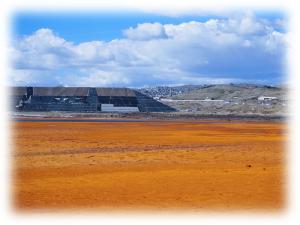
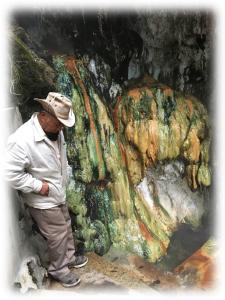
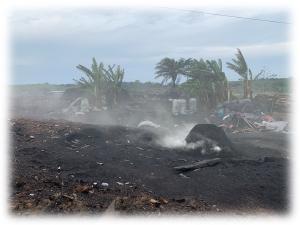
France (Occitanie, Massif Central); Ivory Coast (Abidjan); Andes (Ecuadorian) 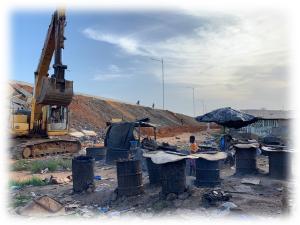 |
 |
 |
Topics in sociological research: the social experience of health and environmental risks
- Sociology of coping with and living alongside everyday risks: Social representations of risk and behaviour in the face of danger; vulnerabilities and capacities (social and political); social attitudes towards risk; risk culture.
- Sociology of public policy: Prevention and protection measures; environmental governance; risk management
- Social representations and local knowledge regarding underground resources.
Interdisciplinary research topics
Socio-ecosystems; methods for co-developing projects at interfaces and building shared knowledge; methods for supporting transformationMethods and approach
- Qualitative approaches: semi-structured interviews, focus groups, field observations.
- Interdisciplinary and transdisciplinary approaches (various tools for cross-referencing social and environmental data: collective intelligence workshops; multi-agent simulation; risk assessment; research-creation). Sociology through images (photographic approach). See: https://monoil.ird.fr/photos and the CNRS and IRD image libraries. Participatory science (EMEPIC project, PEtit Projet Plomb; ANR APIMAMA). Research-creation (forum theatre; eco-narratives, etc.).
Activities / Resume
-
2019 : Habilitation to supervise research. Thesis entitled « Vivre avec les risques environnementaux : vulnérabilités et dispositions sociales », defended at the Midi-Pyrénées Observatory on 18 October 2019. Doctoral School of Universe, Environment and Space Sciences (http://sdu2e.obs-mip.fr/ Université Paul Sabatier). Members of the Jury : Sophie Bretesché (sociologist), Pierre Mazzega (environmental sciences), Marguerite Munoz (tutor; environmental sciences) Pascale Metzger (rapporteur ; geographer), Yannick Barthe (Rapporteur ; sociologist), Rémi Barbier (Rapporteur; sociologist), David Labat (chairman; hydrologist).
- 2003 PhD in Sociology « protéger la nature en France et en Espagne » (TESC, CERTOP, Toulouse)
Participation in ongoing research programmes
- 2022-2026 : Joint responsibility of the ANR APIMAMA (PI : C. Liousse LAERO) on air pollution in Abidjan (2022-2025)
- 2024 -2029: Co-leadership of the ANR project « chantier 13 (massif central) du PEPR Sous-sol bien commun » (PI: F. Cagnard, BRGM et Olivier Vanderhaeghe GET ; 2023-2029 (Joint management, coordination of the social sciences and humanities, and preparation of the ANR response).
- 2024-2026 : Coordinator of the cross-cutting social sciences strand of the European project ThermEcoWat (led by BRGM and ThermAuvergne)
- 2023-2025 : ASECT : Analyse Systémique de l’Economie Circulaire d’un Territoire (Key Challenge: Occitanie Region « Circulades » (PI O. Vanderhaegue ; Regional funding)
- 2023-2024 : PyrTherm : Potentiel du front des Pyrénées pour la géothermie profonde (Funded by Carnot-ISIFOR. Principal Investigator: S. Duchene)
- 2024 : CHORAS, research-creation project on the cultural representations of the mineral springs of the Puy de Dôme (funded by ZATU)
- 2024 : FORESSPIR, Forum theatre project on the drivers and barriers to changing polluting practices relating to coal and wood (funded by OMP).
- 2024 : ZONE ART 2 - Structuring of the Arts & Sciences network within the Zones Ateliers network (funded by RZA)
- 2024-2025 : EMEPIC : Research into environmental activism against industrial pollution in rural areas; (Principal Investigator: V. Léa; funded by Labex SMS)
- 2024-2026 : GEM- Genre, Extractivisme, Migrations : regards croisés sur les mobilisations (PI : H. Prevost et A Lendero –funded by Labex SMS)
Collective responsibilities and expertise
- Co-leadership of scientific projects (PEPR sous sol/PC13; ANR APIMAMA)
- From January 2025: Co-leadership of the ‘Uranium-bearing Territories Workshop Area’ (Massif Central)
- Peer review of scientific articles
- Examination board (PhD scholarships, PhD defences, HDR);
Arts and science activities and projects
- Photographic exhibition on ‘Living with Oil in the Ecuadorian Amazon’ (part of the ANR MONOIL programme) 2017–2019
- Video clips co-produced as part of the COSAV GEOD initiative (IRD; 2023–2024) and created by students from Kourtrajmé Marseille: three episodes of a series entitled ‘#ça tombe pas du ciel’ (‘It doesn’t just fall from the sky’), aimed at raising awareness of the environmental impact of the raw materials hidden within our everyday objects :
- Episode 1, smartphones: https://multimedia.ird.fr/IRD/embed/public/90613
- Episode 2, computers: https://multimedia.ird.fr/IRD/embed/public/91510
- Episode 3, the washing machine at the therapist’s (forthcoming)
- Co-leadership of the ZONE ART project : structuring the art-science community within the CNRS workshop zones network (as part of the Transdisciplinarity group)
International positioning
- Development of international programmes (Africa / Latin America);
- Joint publications with international partners;
- Joint supervision of international students;
- Co-organisation of workshops, scientific events and international interdisciplinary conferences.
Participation in thematic networks
- CNRS Uranium-bearing Territories Workshop (co-director from 2025);
- CNRS Workshop Network (active member of WG3 – transdisciplinarity);
- CoSav (IRD) GéoD: Georesources and Sustainability (member of the steering committee);
- Toulouse Political Ecology Workshop (ATECOPOL).
- Environment-Health Network (RES);
Impact of the activity
Expanding research in the humanities and social sciences within environmental and geosciences research programmes, primarily in the Global South:- Development of large-scale interdisciplinary projects with an international scope;
- Establishment of interdisciplinary (social sciences, life sciences, physical sciences) and inter-laboratory collaborations: within the Midi-Pyrénées Observatory; between the Midi-Pyrénées Observatory and Jean-Jaurès University, Capitole University and the Toulouse Institute of Political Studies; with other French laboratories (LPC in Clermont-Ferrand and SUBATECH in Nantes).
- Dissemination of knowledge in situ; science communication; action research.
- Creative research (first RZA ‘arts and sciences’ workshop in 2023 (ZONE ART); second workshop planned for September 2024)
Training courses
- 2024: Mental Health First Aid
- 2023: Biodiversity Mural
- 2020: Climate Mural
- 2019–2020: Natural Health (EIBE)
Publications extraites de HAL affiliées à Geode : Géographie de l'environnement
Additional information
Programme de recherche terminés
- 2019 CARE: Caractérisation de la présence d'Arsenic et Risques liés à l'Eau au CHILI. Projet exploratoire interdisciplinaire. Partenariat GEODE et GET. Financement par la Maison des Sciences de l’Homme de Toulouse et l’axe transverse Environnement Santé et Société de l’Observatoire Midi Pyrénées.
- 2016-2018 DACCIWA: Dynamics-aerosol-chemistry-cloud interactions in West Africa, European Union 7th Framework Programm. Encadrement de stagiaires et partenariat sociologique.
- 2015-2017 DYNHAPYR: Dynamiques historiques et actuelles du risque torrentiel dans les Pyrénées. Retour d’expérience sur les crues de juin 2013 dans les Pyrénées Centrales, piloté par J-M. Antoine (GEODE) et financé par le Conseil Régional Midi-Pyrénées. Encadrement de stagiaires.
- 2014-2018 P.I du Programme MONOIL (France-Equateur) : monitoring environnemental, santé, société et pétrole en Equateur, avec L. MLaurice (IRD). Programme financé par l’ANR (SOCENV 2013). Projet franco-équatorien interdisciplinaire impliquant 10 partenaires dont 4 équatoriens. Site web : www.monoil.ird.fr.
- 2013 Coordination du projet MONOIL ; financement PEPS interdisciplinaire du CNRS « ESERE -Espace socio-économique du risque environnemental ».
- 2010-2014 ANR (RISK NAT) AMAC : Améliorer l’alerte aux crues ; D. Dartus (IMFT/INP). Représentante du partenaire LMTG pour le projet Coordinatrice de la tâche 4 de synchronisation et intégration des résultats ; enquêtes sociologiques : retour d’expérience d’inondations dans le périurbain toulousain (représentation des risques et comportements face au danger) ; membre du comité de pilotage de la thèse de F. Daupras sur la robustesse organisationnelle face aux inondations dans le bassin Adour-Garonne.
- 2012 MIASMES: maladies liées aux inondations, approches socio-spatiales sur les affluents du MEkong et du Sông-Hồng (Fleuve Rouge), porté par M.Saqalli (GEODE), financement PEPS CNRS. Encadrement de stagiaires.
- 2009-2012 COMETES: contaminations métalliques en Tunisie : environnement et santé, porté par M.Munoz (GET); financé par CMCU (2009-2011 ; 2011-2013), Programme ACI IRD (2013) 20%. Enquête sociologique et partenariat avec institutions tunisiennes.
- 2009-2012 ANR ECLIS (ANR Vulnérabilité Milieu Climat Société): Contribution of livestock systems to the reduction of rural population vulnerability and to the promotion of their adaptability to climate and society changes in sub-Saharan Africa, porté par E. Mougin et P. Hiernaux (CESBIO). Coordinatrice de la tâche de sociologie politique et représentante du partenaire LMTG pour le projet: vulnérabilité et adaptations sociales « ordinaires ».
- 2009-2012 MAELIA: Multi-agents pour l’analyse d’impact des normes environnementales, porté par P.Mazzega (GET), financé par RTRA-STAE. Animation du groupe de travail 1 : « Les effets socio-environnementaux des normes juridiques dans le Bassin Adour-Garonne ».
- 2008-2010 Programme Méthodologie d’analyse spatialisée des risques hydrologiques ; financé par PRES Université de Toulouse (Projet exploratoire associant des unités toulousaines). Coordination scientifique et enquête sociologique : information préventive et vulnérabilités aux inondations.
- 2007-2009 AMMA -Impacts au Mali, programme de AMMA-France porté par JL. Redelsberger (METEO France) : Analyse Multidisciplinaire de la Mousson Africaine. Responsable du groupe de travail 3.3 : « Gestion des ressources naturelles »: Historique et mise en œuvre des politiques publiques de GRN ; Représentations sociales et gestion sociale de l’eau et des risques climatiques.
- 2007-2008 Mangrove et Bioremédiation, porté par F. Fromard (ECOLAB), partenariat SIEAM- CNRS. Responsable de l’axe « sociologie »: représentations sociales des eaux usées et de l’assainissement, politiques de l’eau et vulnérabilités sociales.