


-
Partager cette page
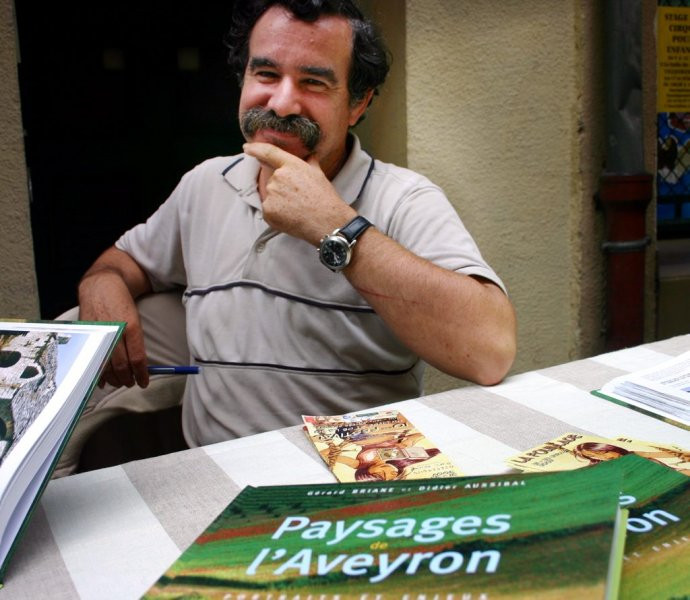
Gérard BRIANE
Associate ProfessorContact details
- Address
- Maison de la Recherche Jean Jaurès University 5, Allées A. Machado - 31058 TOULOUSE Cedex 1
- briane@univ-tlse2.fr
Taught academic discipline(s)
- Lecture 101 Global Environment: Biodiversity, Lecture and Seminar 301 Natural Environments, Lecture and Seminar B 501/601 Environment 1 and 2, Lecture and Seminar C501/601 Landscapes, GAEMP Professional Bachelor’s Degree, First-Year Bachelor’s Degree (Pluri Foix), First- and Second-Year Master’s Degree (GEP), CAPES, Second Year (L2) in Albi.
Educational Responsibilities :
- Program Director for Environmental Studies, specifically for the Physical Geography and Environmental Studies specialization tracks in the bachelor’s degree program within the Department of Geography.
- Director of the Center for Botanical and Ecological Expertise at the GEODE Laboratory since 2009.
Research topics
Study and characterization of natural habitats, biodiversity, and agrodiversity, and their conservation in Occitanie.
The purpose of this research is to analyze how management and/or protection tools are implemented, whether through inventories (second-generation ZNIEFFs, Sensitive Natural Areas, ordinary natural areas, rural environments, etc.) leading to regulatory protection measures (RBD, RBF, APPB, RNR, PNR, etc.) and contractual measures (agri-environmental policy, Territorial Farming Contracts, Sustainable Agriculture Contracts, implementation of the European Natura 2000 ecological network)...
Societal issues are not overlooked, particularly the relationship between nature and society, especially in marginalized rural areas.
One of the key challenges in managing natural and rural areas today is to integrate biodiversity, agrodiversity, and ethnosociodiversity (diversity of uses, practices, techniques, needs, knowledge, and skills…).
As part of a Franco-Mexican ECOS project (2009–2011), research on water management in traditional agriculture was conducted in Puebla with Alexandra Angeliaume (in collaboration with the Colegio de Postgruados de Puebla).
In the longer term, my research focuses on accounting for evolving biodiversity based on changes in environmental states or the long-term succession of these states, and thus on whether or not ecosystems are renewed, considering them both as ecological indicators of these changes and as heritage—biological resources to be managed.
The purpose of this research is to analyze how management and/or protection tools are implemented, whether through inventories (second-generation ZNIEFFs, Sensitive Natural Areas, ordinary natural areas, rural environments, etc.) leading to regulatory protection measures (RBD, RBF, APPB, RNR, PNR, etc.) and contractual measures (agri-environmental policy, Territorial Farming Contracts, Sustainable Agriculture Contracts, implementation of the European Natura 2000 ecological network)...
Societal issues are not overlooked, particularly the relationship between nature and society, especially in marginalized rural areas.
One of the key challenges in managing natural and rural areas today is to integrate biodiversity, agrodiversity, and ethnosociodiversity (diversity of uses, practices, techniques, needs, knowledge, and skills…).
- Particular emphasis is placed on wetlands, especially the peatlands and ponds of southwestern France.
- Other research focuses on agrodiversity (chestnut heritage, non-forest trees, etc.).
- Analysis of the biodiversity of habitats and species (peatlands in the southwestern Massif Central or Pyrenees, ponds of the Ségala, dry grasslands of the Grands Causses, ponds of the Ségala, etc.)
- Assessment of the impact of conservation measures (MAE, ZNIEFF, PNR, Natura 2000, etc.), primarily in the Midi-Pyrénées region—including the characterization, identification, diagnosis, and evaluation of habitats (various expert assessments)
Study of landscape evolution, particularly in Aveyron and the Viaur and Lot valleys (production of a film for the Maison de la vigne et des paysages) - Another study builds on some of the work I conducted during my dissertation on honey-producing resources and their evolution.
International involvement :
As part of a Franco-Mexican ECOS project (2009–2011), research on water management in traditional agriculture was conducted in Puebla with Alexandra Angeliaume (in collaboration with the Colegio de Postgruados de Puebla).
In the longer term, my research focuses on accounting for evolving biodiversity based on changes in environmental states or the long-term succession of these states, and thus on whether or not ecosystems are renewed, considering them both as ecological indicators of these changes and as heritage—biological resources to be managed.
Major Research Programs :
- TCVPYR Program on the Landscapes of Spa Towns in the Pyrenees (2018–2020)
- KLife Program in collaboration with INRA Toulouse, aimed at assessing water management and grassland management in the Midi-Pyrénées region, with A. Angeliaume and F. Blot of GEODE (2013–2015).
- Project Lead for the GEODE EPAL program on the lakes of Aubrac (2017–18). This research focused on the landscapes and uses of Lake Saint-Andéol (48), employing a variety of methods (sedimentology, palynology, archival research, photo interpretation, vegetation surveys, social surveys, etc.).
- 2017–2019 Geohistorical Study of the ENS Site at the Rauzes Peat Bog (Aveyron) Agreement between the ENS, the Aveyron Departmental Council, and GEODE (with A. Angeliaume, J.-M. Antoine, H. Barcet, and E. Maire).
- 2017–2018: ZH Environmental and Social Challenges of Wetland Management and Restoration in the Southwest (Aveyron, Gers, Pyrénées-Atlantiques, and Hautes-Pyrénées), APE (GEODE Call for Emerging Projects)
- Participation in the APE program on wetland management (Moura, Pédestarès, Rauzes) (2018).
- Participation in the Cycad program: changes in urban vegetation (Tournefeuille) (2018)
- Participation in the MATE/CEMAGREF program on « Politiques publiques et paysage », program n°6 « Diversité paysagère et politiques publiques : un enjeu pour le développement local et l’aménagement des territoires (l’exemple du sud-ouest de la France) » (2004/2005).
- MEDD Research Contract « Paysage et développement durable » including the GEODE program : « Paysages de l’arbre hors-forêt dans le sud-ouest de l’Europe» (2007/2009).
- MEDD Research Contract « Interface et trame verte dans le bassin-versant de la Garonne » (2012/2014). A comparative analysis of perceptions of TVB in three study areas, ranging from predominantly rural regions to peri-urban areas: in Comminges around Saint-Gaudens (31), the Salat Valley (09/31), and the Lèze Valley (09/31).
Research Networks :
- Member of the Society of Biogeography, the Botanical Society of France, the Wetlands History Group, and the French Forests History Group.
- Member of the Midi-Pyrénées Regional Scientific Council for Natural Heritage (CSRPN) since 2009
- Member of the scientific advisory board for the program « Causses et Cévennes, patrimoine naturel et culturel » a UNESCO World Heritage Site since 2012
- Member of several Natura 2000 Steering Committees (Causse Noir, Lot Valley, Boundoulaou Caves, Aubrac and Lévezou Peatlands, Causse Comtal, etc.)
- Member of the Scientific Council of the Grands Causses Regional Nature Park
- Member of the Aveyron Society of Letters, Arts, and Sciences
- Scientific Director of the collection of heirloom chestnut varieties in the Midi-Pyrénées region (Rignac)
- Member of the Organizing Committee and Scientific Council of the “Interactions” symposium within GEODE’s Research Area 2
Activities / Resume
Movies and websites
Angeliaume A , Briane Gérard, 2018, LA RESERVE DE BIOSPHERE DE MAPIMI : ETUDE DE CAS AUTOUR D’UNE DES PLUS ANCIENNES RESERVE DE BIOSPHERE (MEXIQUE 1977-2016) UVED/DTICE/GEODE Film.This resource focuses on protected areas managed as Biosphere Reserves, drawing on the case study of the Mapimí Biosphere Reserve in Mexico as well as insights from various other reserves. Produced under the direction of Alexandra Angeliaume (GEODE/UT2J), Bruno Bastard, and Cédric Peyronnet (DTICE.UT2J). Built around thematic topics and testimonials, the videos, courses, and technical fact sheets cover the full range of issues related to protected areas: biodiversity, resources, management plans, local participation, conflicts, ecotourism, and more. It is available at :
1. From the MAB Program to the Creation of the Mapimí Biosphere Reserve 13 min 20 sec
2. From Ecological Riches to the Unique Characteristics of the Watershed Justifying the Reserve’s Designation 14 min 14 sec
3. The Myth of the “Zone of Silence”: From Environmental Degradation to the Origins of Ecotourism 12 min 05 sec
4. The historical heritage of the RBM: Origins of human presence and activities in the heart of the Bolsón 14 min 01
5. A reserve in two phases: 1977–2000 INECOL; 2000–2016 CONANP 8 min 56
6. ANPs and RBs in Mexico: Principles and Management Practices in the RBM 23 min 06
7. Participation in the RBM: Methods and Success Factors for Restoration and Awareness-Raising Initiatives 24 min 17
8. Agriculture within the reserve: between challenges and attachment to the land 14 min 24
9. Agriculture on the edges of the reserve: intensive practices based on water resources 12 min 32
10. Ecotourism in the RBM: history and dynamism of the “La Flor” association 15 min 42
11. Salt harvesting by women: a springboard for improving living conditions and preserving the environment 14 min 26
12. Environmental education around the RBM: raising awareness among residents and children 14 min 15
13. Researchers and research networks: contributing to assessments 17 min 02
14. CONANP: actions and the community’s assessment of its work 15 min
15. Between research and action: the case of water resources in a semi-arid zone 18 min 19
16. The Bolsón Turtle: From the Reserve’s Symbol to a Collective Conservation Challenge 19 min 57 sec
17. RBM and the MAB Program: Between Disillusionment and New Prospects 30 min 19 sec
Briane G – Jimenez J, 2016, Des châtaigniers et des hommes dans le sud-ouest européen, 18 Films UVED/DTICE/GEODE
1. The Four Stages of Chestnuts (20-minute film)
2. The Origins of the Chestnut Tree (11 min.)
3. The Culture of the Chestnut Tree (15 min.)
4. The Chestnut Tree: A Landscape Tree (15 min.)
5. The Ecology of the Chestnut Tree (15 min.)
6. The Enemies of the Chestnut Tree (20 min.)
7. The Chestnut: An Organic Product? (15 min.)
8. The Chestnut Tree: An Asset for Agricultural Diversity? (15 min.)
9. The economics of the chestnut tree (26 min.)
10. Chestnut tree forestry (15 min.)
11. The chestnut industry: flour, candied chestnuts, jams… (15 min.)
12. Enhancing chestnut groves through protected areas (15 min.)
13. The chestnut tree, European countries and terroirs: Spain (20 min.)
14. The chestnut tree, European countries and terroirs: Portugal (20 min.)
15. The chestnut tree, European countries and terroirs: Italy (20 min.)
16. The revival of chestnut cultivation: what does the future hold for the chestnut? (20 min.)
17. The evolution of chestnut grove landscapes in the Viaur Valley (Aveyron/Tarn) (7 min.)
18. The evolution of chestnut grove landscapes in the Cévennes (10 min.)
BRIANE G. et DESAILLY B., 2013, Dynamiques de la biodiversité et de l’agrodiversité, Grande leçon UOH, web site UOH.
BRIANE Gérard et Jean JIMENEZ, 2013, Le renouveau de la châtaigne, film UOH/DTICE/GEODE (20 mn)
ANGELIAUME Alexandra, BRIANE Gérard et JIMENEZ Jean, 2013, Les zones humides dans le sud-ouest de la France, UOH/DTICE/GEODE film (62 mn)
BRIANE Gérard et Jean JIMENEZ, 2013, Abeille et agriculture intensive, film UOH/DTICE/GEODE (40 mn)
This is a collection of online courses, video resources, and bibliographic references on wetland management, based on case studies in Aubrac and Ségala (Aveyron), Armagnac (Gers), and the Toulouse region (Haute-Garonne). This resource, developed in partnership with DTICE/UT2J, was produced in collaboration with Alexandra Angeliaume, Bertrand Desailly, GEODE/UT2J, and Jean Jimenez (DTICE/UT2J), and is primarily used in our undergraduate (L3) environmental science courses and the GEP Master’s program.
BRIANE Gérard et MICHAUX Nathalie, 2013, Les cerises en vallée du Tarn, film DTICE/GEODE/mairie de Paulhe/ PNR Grands Causses (62 mn).
BRIANE G. et JIMENEZ J., 2007, Coustouby, les gens du vin d’Estaing, film DTICE (58 mn) in partnership with the Estaing Community of Municipalities
Publications extraites de HAL affiliées à Geode : Géographie de l'environnement
Additional information
Implication dans le tissu professionnel local :
Les méthodes et outils mis en œuvre portent sur des inventaires et relevés phyto-géographiques :- Rédaction de documents de gestion comme des documents d’objectifs (DOCOB) (partenariat : PNR Grands Causses, ONF, ADASEA, DREAL…).
- Inventaires des habitats naturels selon la méthodologie Corine-biotope
- Analyse et inventaire de la biodiversité au travers de plusieurs exemples : réactualisation des ZNIEFF, Natura 2000, espaces de nature ordinaire…
- Inventaire du patrimoine biologique (variétés de châtaigniers, participation à la gestion d’un verger conservatoire).
- Analyse et suivi des mesures agri-environnementales : suivi sociologique, écologique et paysager dans les pelouses sèches et les zones humides du sud du Massif Central Aubrac, Lévezou, Grands Causses…).
- Participation aux inventaires floristiques et à la qualification de l’intérêt mellifère du concours des prairies fleuries en Aveyron (2013, 2017, 2019)
- Enquêtes de terrain, notamment vis-à-vis de la gestion des zones humides.
- Réalisation et participation à plusieurs films à caractère paysager et environnemental: vins et paysages d’Estaing, trophées de l’eau Agence Adour-Garonne, gestion des zones humides, apiculture, agrobiodiversité, châtaigneraie méditerranéenne, désert de Mapimi au Mexique …
- Participation à l’évaluation de films pour le conseil scientifique de l’UVED (2013)
- Participation à diffusion de la recherche (Novela de Toulouse, associations, conférences…).
Les principaux partenaires sont la DIREN/DREAL, l’INRA, l’ADASEA, le Conservatoire botanique Midi-Pyrénées, la région Midi-Pyrénées, le Conseil Général de l’Aveyron, les associations Arbre et paysage, Solagro, les PNR, les Collectivités locales, etc…