


-
Partager cette page
Spatio-temporal dynamics of land use in north-eastern Senegal: from diachronic analysis to prospective modelling
Awa Amadou Sall, Elhadj Faye E., Mehdi Saqalli
Published on May 26, 2026 – Updated on May 26, 2026
Abstract :
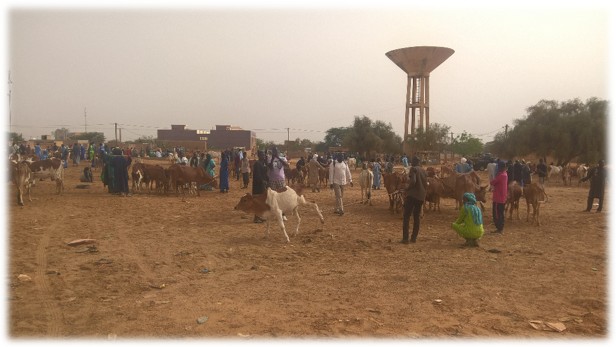
- Background: North-eastern Senegal is a region renowned for extensive pastoral livestock farming based on transhumance, in which herders move in search of pasture.
- Objective: This study analyses the spatio-temporal dynamics of land use in north-eastern Senegal during the period 2000–2024, with a projection to 2050.
- Methods: The analysis employs three complementary approaches: multi-temporal remote sensing, field surveys and predictive modelling. The observed dynamics are examined using three land-use classes: water bodies, vegetation and the ‘other’ category.
- Results: The results revealed a decline in vegetation and water bodies between November and May, reflecting the seasonal impact of drought on Sahelian ecosystems. On an interannual scale, a trend towards a decrease in vegetation cover (-43.6% between 2000 and 2023) and an expansion of ‘other’ land cover (+97.6%) was observed. Projections for 2050 suggested a possible reversal of this trend, with a moderate recovery in vegetation, particularly as a result of restoration policies.
- Conclusions: These findings highlight the urgent need to strengthen sustainable land-use strategies and adaptation policies in the Sahel region, which is facing increasing climatic and human-induced pressures.